Eleven tented suites on the edge of the Ghoha Hills, looking out over the Savuti Plains.
Two guided drives a day, a long excursion out to the marsh and the rock art, and the hours in between spent watching whatever comes to the waterhole below.
Savuti has a reputation among people who know Botswana well. The marsh fills and dries on its own schedule, the elephant herds here are large, and the predators that follow them have made this one of the more talked-about corners of Chobe. The lodge runs its own private network of roads and waterholes through it.
Drives go out twice a day, early and late, in open 4×4 vehicles seating six. Between them there is a full day excursion available to guests staying two nights or more, running out to the Savuti Marsh, the Baobab Theatre and the Bushman rock paintings, with lunch packed. Everything else happens around the lodge and mostly without a plan.
ARTS AND CULTURE
The full day excursion out to the Savuti Marsh reaches two things worth the drive on their own. The Bushman rock paintings are the older of them, left on the rock by people who moved through this landscape long before it carried a park boundary. The Baobab Theatre and Pimple Hills sit on the same route, and the day gives as much of the area’s cultural history as it does its ecology.
Typical day on safari
Early morning wake-up call
Continental breakfast in the dining area
Leave for the morning activity, approximately 4 to 6 hours
Lunch in the dining area
Time to rest and enjoy the lodge facilities and surroundings
High tea
Sundowner game drive, approximately 2 hours
Return to the lodge
Dinner in the dining area
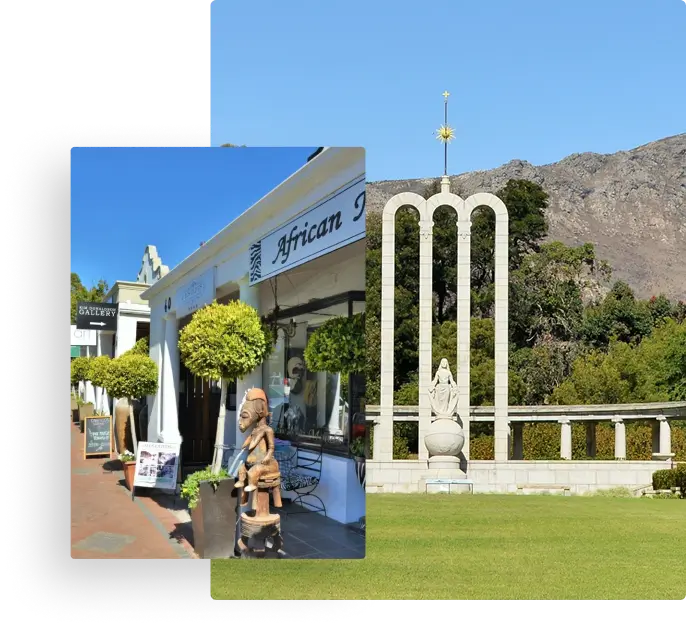
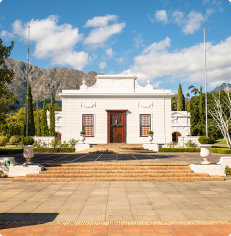
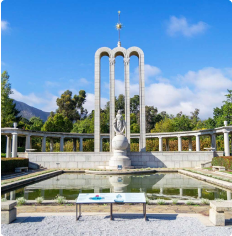
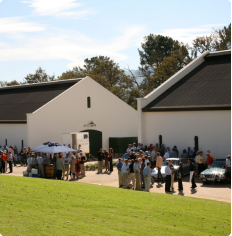
Franschhoek, South Africa’s French Corner, boasts a rich historical and cultural heritage dating as far back as the late 1600s, commemorated in a multitude of ways throughout the small town. With impressive memorials, an assortment of history museums and charming Cape Dutch architecture, a trip to Franschhoek offers more than just a scenic vista. Meander through the vineyards, or along the broad avenues, and feel the history of the place around every corner.
Read further
In 1685, Protestantism was outlawed in France, forcing hundreds of people to flee from their homes. Almost 300 of these Huguenots arrived at the Cape of Good Hope by ship, and were soon given land in a valley called Oliphantshoek, Elephant’s Corner, which took its name from the vast herds that once made their way into the area to calve. With the influx of French occupants, the valley became known as le Coin Francais, and later Franschhoek, French Corner in Dutch.
This interesting and resilient history is still honoured in the modern-day town, and several attractions both celebrate and elaborate on its origins. Museums, galleries, sculpture gardens and artisan studios reflect the valley’s layered past while adding a contemporary lens, offering visitors a slower and more meaningful connection to place.
Franschhoek, South Africa’s French Corner, boasts a rich historical and cultural heritage dating as far back as the late 1600s, commemorated in a multitude of ways throughout the small town. With impressive memorials, an assortment of history museums and charming Cape Dutch architecture, a trip to Franschhoek offers more than just a scenic vista. Meander through the vineyards, or along the broad avenues, and feel the history of the place around every corner.
In 1685, Protestantism was outlawed in France, forcing hundreds of people to flee from their homes. Almost 300 of these Huguenots arrived at the Cape of Good Hope by ship, and were soon given land in a valley called Oliphantshoek, Elephant’s Corner, which took its name from the vast herds that once made their way into the area to calve. With the influx of French occupants, the valley became known as le Coin Francais, and later Franschhoek, French Corner in Dutch.
This interesting and resilient history is still honoured in the modern-day town, and several attractions both celebrate and elaborate on its origins. Museums, galleries, sculpture gardens and artisan studios reflect the valley’s layered past while adding a contemporary lens, offering visitors a slower and more meaningful connection to place.
A FEW SUGGESTIONS
Morning and afternoon game drives, extended excursions to the Savuti Marsh, sundowner drives beneath the baobabs, birdwatching, stargazing, private dining and spa treatments. Most of the day is built around the two guided drives.
The morning activity at Ghoha Hills Savuti runs roughly four to six hours, and the afternoon sundowner drive around two. Both go out in open 4×4 vehicles on a private network of roads through the Savuti region.
Yes. Drives at Ghoha Hills Savuti are shared by default, with six seats to a vehicle, and a private vehicle can be arranged at an extra cost. Ask the lodge when you book so a vehicle and guide are held for you.
A full day excursion from the lodge visiting the Savuti Marsh, the Baobab Theatre, the Bushman rock paintings and Pimple Hills, with a picnic lunch. It runs for guests staying a minimum of two nights at Ghoha Hills Savuti.
The Savuti region of Chobe National Park is known for large elephant herds and a strong predator presence, lion and hyena among them, moving across the plains below the lodge and around its waterholes.
Yes. The Savuti region attracts a wide range of resident and migratory birds, and they can be watched on the game drives, around the main lodge area, or from the private viewing deck of your own tented suite.
Bring both, along with spare memory cards. Every suite at Ghoha Hills Savuti has power points for charging photographic equipment, drawn from the lodge’s solar farm, and light neutral coloured clothing works best on the drives.
CONNECT
Fill in the fields below and we will come back to you as soon as we can. Everything you send us is kept confidential.
Our Hotels & Resorts