AVAILABLE ACTIVITIES

The Lagoon Does Most Of The Work

The Uembje Lagoon is warm, shallow along its edges and held apart from the Indian Ocean by a towering sandbar, which is exactly why so much happens on it. Kayaks and snorkelling gear are kept at the lodge, boats leave the jetty on a schedule, and the guides who run the dune outings sort the permits before you go. Everything is booked at reception, and booking a day or two ahead is the safest way to get the spot you want.

Kayaking And Canoeing

Kayaks, canoes and paddle craft are kept at the lodge, with paddles and life jackets in assorted sizes. The lagoon is calm enough that first-timers manage easily, and a sunset paddle brings you close to flamingos, pied kingfishers and malachite kingfishers.

Snorkelling

Snorkelling gear for adults and children is available at reception, and staff will point you to the better spots around the lagoon. Guided snorkelling trips run for a minimum of four people and a maximum of eight, so book ahead to secure your place.

Boat Trip To The Lagoon Mouth

The scheduled trip runs twice a week, on Tuesdays and Thursdays, leaving the jetty at 09:00 and returning at 12:00 with up to 20 people aboard. Private trips to the mouth can also be arranged for groups of four to fifteen.

Boat Trip And Walk To Turtle Rock

A 45-minute boat trip and a 25-minute walk over the dunes bring you to Turtle Rock, where there is a good chance of seeing leatherback turtles. The trip takes a minimum of four people and a maximum of fifteen, and is booked at reception.

Sunset Cruise On The Lagoon

An hour and a half on a motorboat, limited to ten people, returning to Bilene beach just after dark. Departure shifts with the season, so check the time at reception. Bring your own drinks or ask reception to organise something local.

Lagoon Fishing Trips

A private fishing trip on the lagoon runs one and a half to two hours and is arranged at reception, with a small selection of rods available. Choose a larger motorboat or a small dhow for up to four, with a minimum of four people and a maximum of eight.

Deep-Sea Fishing

Private deep-sea fishing trips are run by outside contractors, and both availability and pricing move with the season. Enquire at reception and the team will put you in touch with the right service provider for the dates you are there.

River Kayaking And Tubing

A 45-minute to one-hour trip out to the departure point, with a round trip of about three hours. Kayaks suit smaller groups of four and tubes work better for groups of up to ten. On request, minimum four people and maximum ten.

Dune Sledding And Sand Boarding

Climb the sand dunes and sled straight down into the freshwater lakes below, an outing the resort also lists as dune boarding. You will need your own 4x4 to reach the dunes; guides come with you, bring the sleds, arrange the permits and walk the dunes alongside you.

Birdwatching

Water birds flock on the lagoon and the shallows in front of the lodge, and you can watch most of them from a kayak or the beach. Flamingos, pied kingfishers, palm-nut vultures and malachite kingfishers all turn up along this stretch of water.

Ferry Across The Lagoon

A ferry runs across the lagoon to the beach and the sea on the far side, and is booked at reception. It is the simplest way to swap the sheltered lagoon shore for the ocean side without organising a boat of your own.

Jet Skiing

Jet skiing is one of the activities available in the area around Bilene, alongside sand boarding and snorkelling. The resort slipway takes jet ski launches, so guests who tow their own can put in from the lodge.

Bilene Village Market

The market is a short walk from the lodge, stocked with fresh produce, cashew nuts, fish, crabs and prawns straight off the boats. Brightly coloured capalanas and locally made clothes hang in the small stores, and curio traders set up alongside them.

Restaurants And Bars In Bilene

There is no restaurant on the property, and several restaurants and bars sit within easy reach of the resort, serving Mozambican food and local beer. Fresh fish and prawns can be bought daily from the fishermen or the market if you want to cook at your unit.

Dream Xplorers For The Children

The kids programme runs on a digital passport: children complete activities, earn Kamo credits and collect badges across four categories, from lagoon snorkelling and shell hunting to sandcastles, bingo and movie nights. Sign-up happens at reception on arrival.

ARTS AND CULTURE

Bilene Village Is Part Of The Holiday

A Short Walk From The Gate

A few minutes on foot from the boom gate, Bilene village runs on its own rhythm. The market sells fresh produce and cashew nuts, capalanas hang bright in the doorways of the small stores, and curio traders lay out their work along the way. Dhows come back in through the afternoon with fish, crabs and prawns, and the beachside cafes fill up as the light goes. It is a short walk that changes the shape of a stay here.

Our History

An inscription cut into the rock by A.J. De Wit and dated 1812 tells us the springs were known here well before that. The story that comes with it is of a trekboer who hurt his hand mending an ox-wagon wheel, bathed it in a nearby stream, found the water warm and traced it back to its source. His hand is said to have healed quickly, and word of the spring spread through the Cape Colony until people were arriving from across the country and beyond to try it.

Khoi rock drawings survive in caves and on rock faces across the greater Montagu area, so the springs were almost certainly known for hundreds and possibly thousands of years before that. The real date is long gone. The land around the water changed hands many times and was put to many uses, and since 1982 it has been part of Avalon Springs.

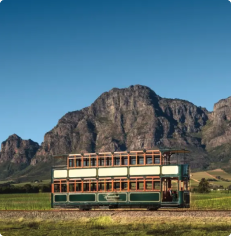
Cogmans Kloof, also written Kogmanskloof, is the gorge that cuts through the Langeberg between Ashton and Montagu on the R62. It takes its name from the Cogmans, a Khoi chiefdom that lived in the area around the beginning of the 18th century.

The poort is incised almost entirely into intensely folded sandstone of the Table Mountain group and follows the course of the Kigna River, which runs south-west of Montagu. Those formations were laid down, folded and faulted more than 500 million years ago, and at the Ashton end the older Malmesbury group sits beneath them. How the kloof came to cut clean through a mountain range is not settled; several processes probably worked together, and the rivers may simply have been there first, cutting down as fast as the land rose. The shape of it is still changing, too slowly for anyone to notice in a lifetime.

In January 1981 heavy rain over the southern Karoo brought the Keisie and Kigna rivers down in flood. They met at their confluence in Montagu and drove through Cogmanskloof to Ashton and the Breede River, with considerable loss of life and damage to property. A plaque fixed to the rocks just past the Activity Centre marks how high the water reached.

An inscription cut into the rock by A.J. De Wit and dated 1812 tells us the springs were known here well before that. The story that comes with it is of a trekboer who hurt his hand mending an ox-wagon wheel, bathed it in a nearby stream, found the water warm and traced it back to its source. His hand is said to have healed quickly, and word of the spring spread through the Cape Colony until people were arriving from across the country and beyond to try it.

Khoi rock drawings survive in caves and on rock faces across the greater Montagu area, so the springs were almost certainly known for hundreds and possibly thousands of years before that. The real date is long gone. The land around the water changed hands many times and was put to many uses, and since 1982 it has been part of Avalon Springs.

Cogmans Kloof, also written Kogmanskloof, is the gorge that cuts through the Langeberg between Ashton and Montagu on the R62. It takes its name from the Cogmans, a Khoi chiefdom that lived in the area around the beginning of the 18th century.

The poort is incised almost entirely into intensely folded sandstone of the Table Mountain group and follows the course of the Kigna River, which runs south-west of Montagu. Those formations were laid down, folded and faulted more than 500 million years ago, and at the Ashton end the older Malmesbury group sits beneath them. How the kloof came to cut clean through a mountain range is not settled; several processes probably worked together, and the rivers may simply have been there first, cutting down as fast as the land rose. The shape of it is still changing, too slowly for anyone to notice in a lifetime.

In January 1981 heavy rain over the southern Karoo brought the Keisie and Kigna rivers down in flood. They met at their confluence in Montagu and drove through Cogmanskloof to Ashton and the Breede River, with considerable loss of life and damage to property. A plaque fixed to the rocks just past the Activity Centre marks how high the water reached.

GOOD TO KNOW

FAQ

Kayaks, canoes and life jackets are kept at the lodge for guests, and the beach, pool and jetty are open to everyone staying. Guided excursions such as boat trips, snorkelling outings and dune sledding carry an additional cost.

Everything is booked with reception at the resort, and you can book in advance to secure your spot. Most excursions carry a minimum and maximum party size, so booking early matters on busier weeks.

Turtles come ashore at Bilene to lay their eggs in the warmer months, and the boat trip and dune walk to Turtle Rock gives a good chance of seeing leatherbacks. Snorkellers also meet them in the shallows in the right season.

The Uembje Lagoon is separated from the Indian Ocean by a towering sandbar, which leaves the shallows along the shore at Bilene warm and calm. The lagoon reaches 50 metres at its deepest, so keep children within the shallows.

Yes. Fishing permits are obtainable from Marintimho, and staff at Bilene Club Lodge will tell you where to go. The resort has a slipway and jetty, so guests who tow their own boat can launch from the property.

Water birds gather on the Uembje Lagoon in numbers, and flamingos, pied kingfishers, palm-nut vultures and malachite kingfishers are all recorded along this stretch. A kayak on a still morning is the easiest way to get close.

No. The roads to Bilene are tarred and no 4×4 is required to reach the resort. A 4×4 is needed for the dune sledding excursion, because the dunes themselves are reached off-road.

CONNECT

We would love to hear from you.

Please fill out all of the fields below and we will get back to you as soon as possible. All information will be kept confidential.